Grafiksel Studio

Edit Template

All posts

Should you hire an in-house designer or work with an external one?

DESIGN FOR YOUR BUSINESS Should you hire an in-house designer or work with an external one? Need design support more often and weighing up a full-time hire, monthly support or working with a designer on individual projects? Grafiksel Studio · A guide for business owners Share this article LinkedIn↗ Facebook↗ WhatsApp↗ Copy link↗ For Instagram, copy the article link and add it to your Story using the link sticker. How do I share this on Instagram? For Instagram, copy the article link and add it to your Story using the link sticker. Follow the studio Instagram↗ LinkedIn↗ Facebook↗ Tips Should you hire an in-house designer or work with an external one? Grafiksel Studio · Tips On Monday, sales sends you a presentation that needs polishing before a client meeting. On Wednesday, the Google Ads visuals need replacing. By Friday, you realise the old price is still on the website. It all gets sorted somehow, but next month you’re back to asking who has time to handle the design. When you run a business, it’s easy to treat these tasks as little things. Your customers see them every time they open a proposal, click an ad or pick up a leaflet. That’s how they see your business, so it’s worth deciding who will look after these materials regularly. Here are three ways to work with a designer, with examples to help you decide which fits your business. In this article When you need a full-time designer on your team When it makes sense to work with a designer monthly When to hire a designer for a single project 1. When you need a full-time designer on your team Hiring in-house makes sense when you know what you want to promote, it’s clear who makes those decisions and there’s enough design work week after week. If you offer several product lines or a range of services, the work can quickly add up as you run campaigns, update catalogues and create new sales materials. Imagine a company with several product lines preparing a seasonal campaign, rolling out new packaging and sending updated catalogues to its sales teams. Marketing runs the campaign, prepares the content and tracks performance. The designer sets the visual direction, creates the materials and adapts them to the formats sales and marketing need. The value of an in-house designer starts before any of those materials are made. They attend weekly meetings, hear what’s changing in the product range and can keep the packaging, catalogue and ads aligned. If priorities shift during the day, they can decide with the team what comes first. An in-house designer can get involved while the team is still setting priorities. How do you know if you have enough work for an in-house designer? Design tasks come up every week. You regularly need new materials or updates for existing products, services and campaigns. The designer needs to be involved from the start. Decisions about what to promote, what to say and when to launch often affect the packaging, catalogue and ads at the same time. Priorities change during the working day. Sales urgently needs a new version of the catalogue, while marketing needs to update the campaign visuals that same day. An in-house designer can agree with both teams on what comes first. Set aside a workspace for the designer when they work with the team in person. If your team works from an office, give the designer somewhere to work when they come in to meet with marketing and sales. That applies even if they work remotely part of the week. Pay attention to what goes into the job description Once you know there’s enough work for a full-time role, look at how much of it is actually design. On paper, “website maintenance” looks like one item. In practice, the designer could spend an entire morning figuring out why a layout broke on a site someone else built. Add market research, spreadsheet updates, campaign planning, writing posts and other content, and developing ideas for new products. By the end of the day, there are twenty minutes left for design. Tomorrow, it happens again. When all these tasks compete for the same hours, it’s hard to do them all well. Someone who joined to do design can lose motivation and burn out. If a new person takes over every few months, the team has to track down working files, figure out where website prices are updated and piece together decisions about campaigns. Materials fall behind schedule, frustration grows and the next person inherits the same overloaded job description. Say sales notices a product is doing well in store, and you want it to reach new customers this season. You, someone in sales or the marketing team can decide what you want to achieve and where to promote it. The designer joins early enough to suggest how to present it in the online shop and in ads. When those decisions and tasks overlap every day, that collaboration is a good reason to have a designer on the team. Things work best when design, sales and marketing stay in sync and everyone knows what they’re responsible for. 2. When it makes sense to work with a designer monthly This month, sales needs a new presentation and you need visuals for Google Ads and social media for an upcoming promotion. Next month it’s a printed leaflet and blog cover images. If you run an online shop, you might also need banners for current offers. The materials change from month to month, but the need for design keeps coming back. A monthly arrangement works well when you need design regularly and can usually agree on tasks and deadlines in advance. Your team decides what to promote, who it’s for and what you want to achieve. You give the designer the content and key information, and they work out how to communicate the message visually. At the start of the month, you agree on what to make, what comes first

Should you hire an in-house designer or work with an external one? Read More »
Visual identity: Why isn’t a logo enough on its own?

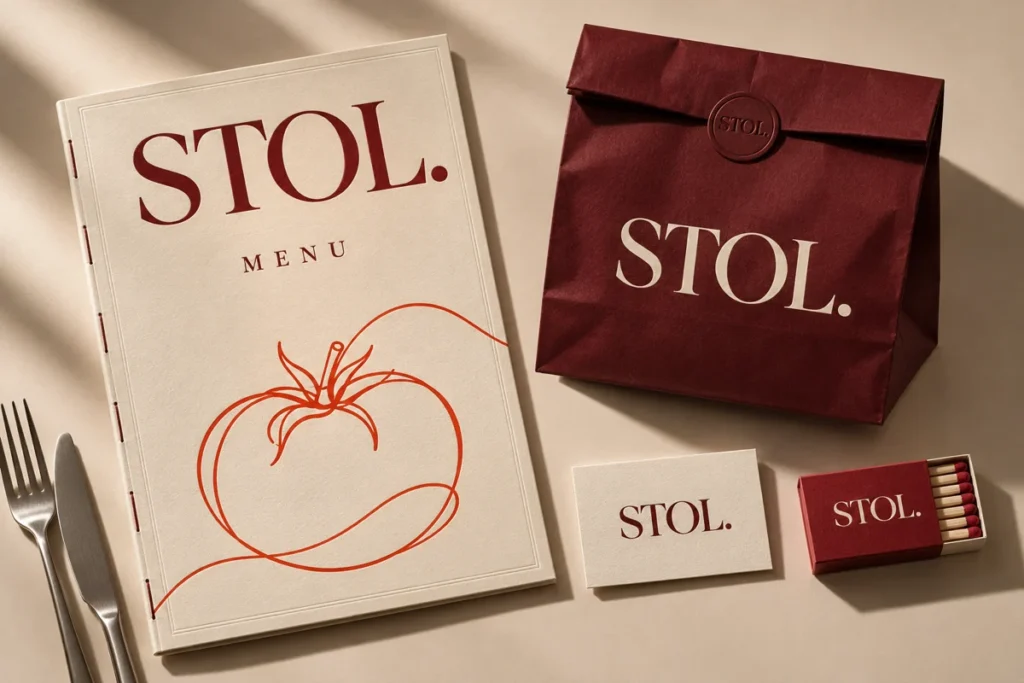
DESIGN FOR YOUR BUSINESS Logo or visual identity: what are you actually paying for, and what do you need? You need a logo, but the quotes you receive vary in both price and what’s included. We explain the difference by answering questions you’ve probably already asked. Grafiksel Studio · A guide for business owners Share this article LinkedIn↗ Facebook↗ WhatsApp↗ Copy link↗ For Instagram, copy the article link and add it to your Story using the link sticker. How do I share this on Instagram? For Instagram, copy the article link and add it to your Story using the link sticker. Follow the studio Instagram↗ LinkedIn↗ Facebook↗ Design for your business Logo or visual identity: what are you paying for, and what do you need? The STOL restaurant example: a menu, packaging and cards connected by one identity. You are starting a business, launching a product or finally ready to present your work more professionally. You need a name, a website, perhaps Instagram and, of course, a logo. You ask a few designers for quotes and receive very different proposals. One offers logo design, another a basic visual identity, and a third describes the service as branding. The prices vary, and you still need an answer to one simple question: “What am I actually getting for my money?” If you do not work in design, it is completely understandable that the difference is unclear. Especially when everything is presented through a few attractive images, technical terms and lists of files that mean little to you. THE SHORT ANSWER A logo is the mark people use to recognise your business. Your visual identity includes that mark and defines how everything around it looks, from menus and packaging to your website and social media. IN THIS ARTICLE Logos and visual identity A restaurant example: 5 key questions What are you paying for? What does the research show? What does your business need? Before accepting a proposal 01 / THE BASICS What is a logo, and what is a visual identity? A logo can be a specially designed business name, a symbol or a combination of both. It appears on your materials and helps people identify whose products, services or content they are looking at. A visual identity includes your logo and the other elements that create a recognisable look for your business: Colours used across your materials. Typography, meaning the fonts used for headings, body text and other information. Graphic elements, such as patterns, lines, shapes or illustrations. Photography direction, meaning the kinds of photographs you choose and how you use them. Layout guidelines, which define how these elements work together. One restaurant. A connected look. Identity example STOL. The logo is the starting point.These elements shape the look of everything around it. 01+ColoursBurgundy, cream and red 02+AaAaTypographyHeadings and readable text 03+Graphic motifsDetails that connect 04+LayoutA clear content structure What does this meanin practice? The same colours, different applications. The chosen colours appear across the menu, packaging and posts. Each new piece has a clear starting point and looks connected to the restaurant. A visual identity brings individual elements together into a recognisable whole. Click or tap an element ↑ Depending on the project, the service may also include ready-to-use templates or the design of specific materials. The difference becomes clearer when you need to create something new after receiving your logo. You have the logo, but the rest of the material still needs to be designed. 02 / A PRACTICAL EXAMPLE You are opening a restaurant. What do you actually need? Imagine you are opening a restaurant. You have chosen a name and now need a menu, an entrance sign, an Instagram profile and takeaway packaging. Explore the difference Logo only Visual identity STOL. The restaurant’s core mark One direction across your materials. Colours, typography and graphic motifs connect the menu, packaging and other restaurant materials. These five questions explain what logo design gives you and what a developed visual identity adds. Open the question you want to explore. 01What do I receive, and where can I use it? Logo design You receive a design for the restaurant’s name, a symbol or a combination of both. Depending on the agreement, you also receive versions for different backgrounds and sizes. You can place the logo on a menu, entrance sign or takeaway box, but those materials still need to be designed. Visual identity You receive a logo and a developed visual style around it: colours, fonts, graphic elements and guidelines for combining them. This gives the restaurant a shared foundation across its different materials. 02What will my menu look like? Logo design You have a logo for the cover. You still need to choose fonts for dish names, how prices appear, colours, category layouts and the other details that make a menu easy to read. Visual identity You have defined fonts, colours and layout guidelines to design the menu around. For example, it is clear how to distinguish a dish name from its description and price. A completed menu design is included only if it is listed in the proposal. 03How do I connect Instagram, signage and takeaway boxes? Logo design The same logo can appear on all of them. However, if different fonts, colours and styles are chosen for each item, the rest of the design may feel disconnected. Visual identity Selected colours, fonts and recognisable details repeat across different materials. Posts and packaging do not need to look identical, but they follow the restaurant’s shared visual style. 04What happens when I need a new offer or seasonal menu? Logo design You have a logo, but the person creating the next piece may need to make all the other decisions again or try to recreate the style from previous examples. Visual identity There are guidelines that you, an employee or another designer can follow. If templates are included, you can update some content within an existing design. 05Do I receive all the finished materials? Logo design Only if those tasks

Visual identity: Why isn’t a logo enough on its own? Read More »